7m
Betamax
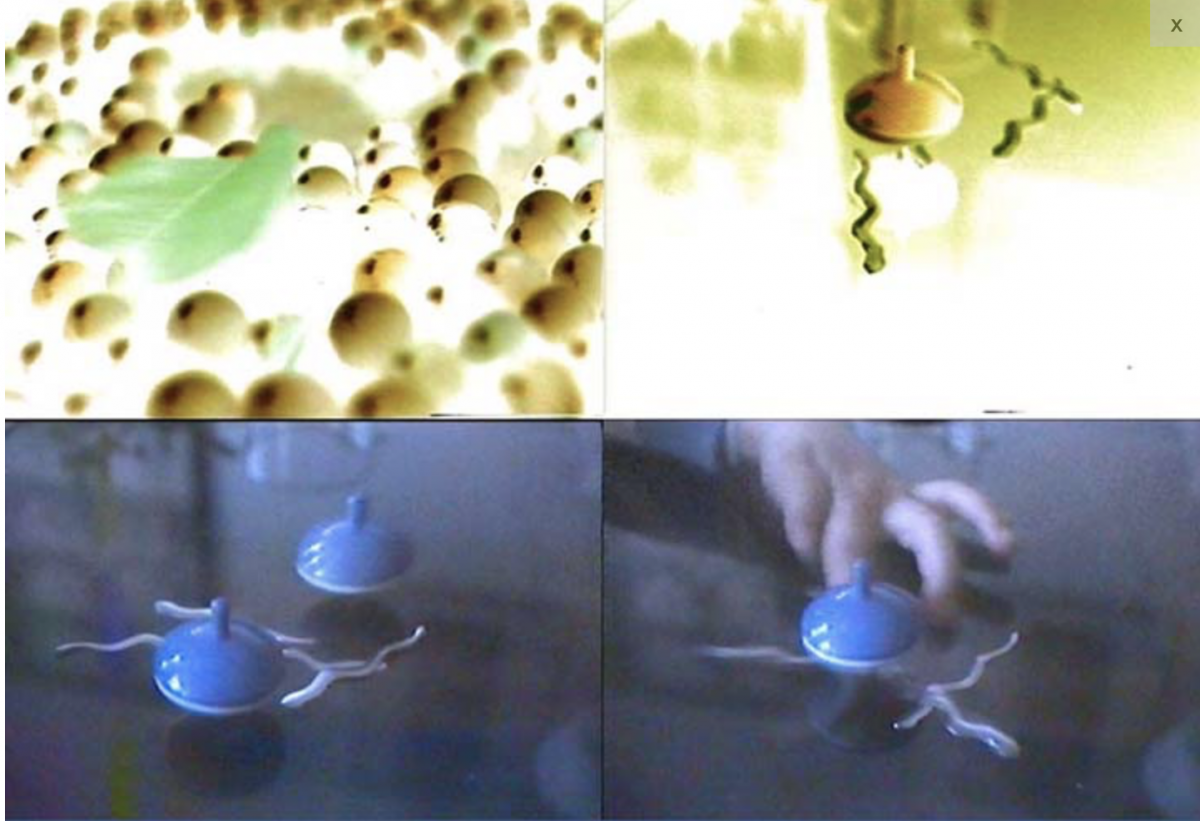
Various objects rotate, move, and change colour using video effects. There are human hands of children and adults, that activate them the objects. There is a voice describing the movements and action generated. We can hear in the background comments about the relevant news outside of the scene. At the end of the sequence the objects that were used are revealed. …
Continue reading “Escena domestica en movimiento (Domestic Moving Scene)”
8m
Betamax
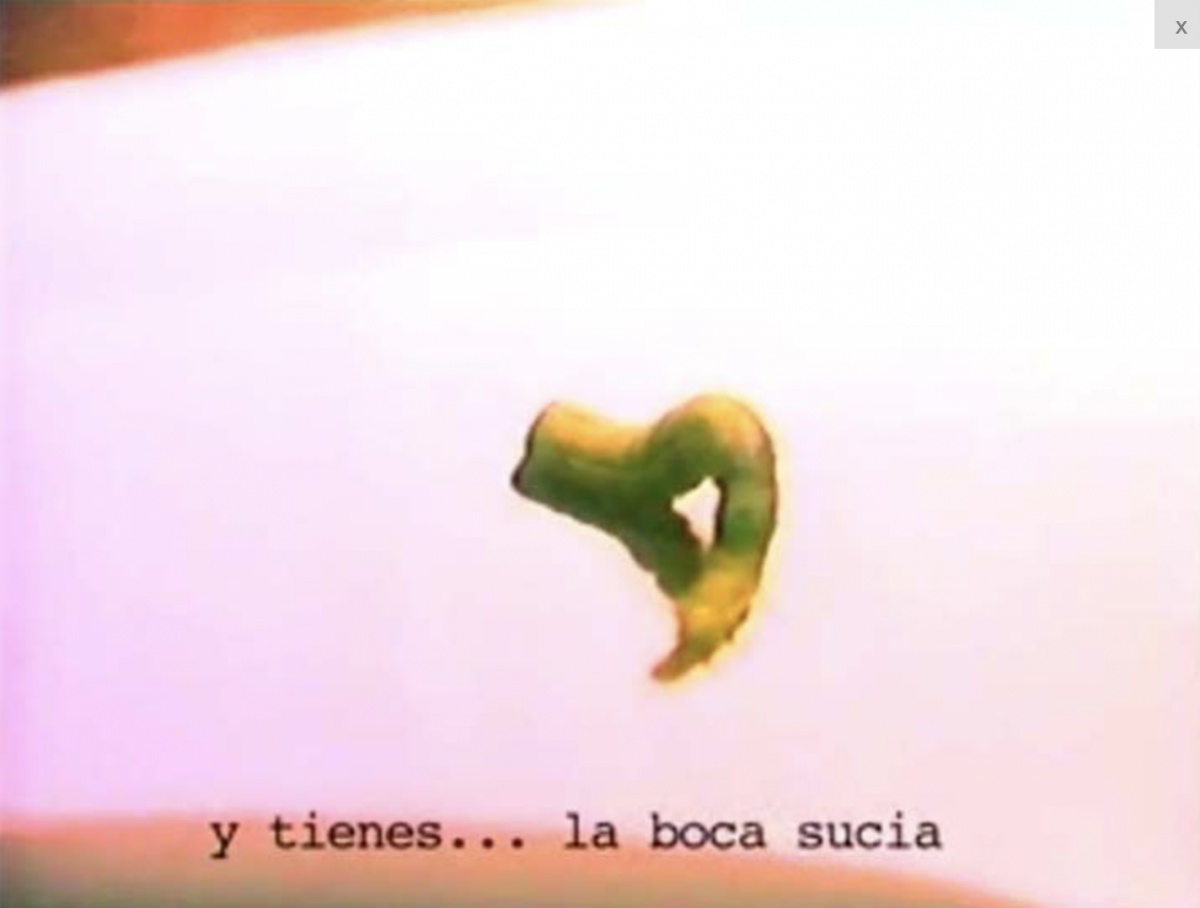
A green worm is taken out of context and has its movements recorded in different positions for 2 hours by the first portable betamax video in 1983. A 3-year old boy witnessed the recording and spontaneously was narrating the action of the worm. It was a familiar scene during which the mother, the artist, was recording it.
…
Continue reading “Escena doméstica con gusano verde (Domestic scene with a green worm)”
When you switch on television, you can move from crime to passion, from the past to the future, in different rapidities, you are part of all possible times and spaces.
In ‘Romeo is bleeding’ time and space are in a same way wrenched from their original context. The producer of this video fulfills a variety of roles in a setting reflecting both comic-strip decors and primitive surroundings. Links are made with cultures of Africa, …
Continue reading “Romeo is Bleeding”
Prior to this tape Lydia Schouten had used video as part of her performance or to register it. But this is a television recording. ‘In making this tape I started from the assumption that I wanted to produce a spectacle’ she writes.
“I’m interested in the influence of the mass media on our attitude to everyday life. The images I show are about ‘desire’, ‘rhythm’ and ’emotion”. Just as in her performances, she uses herself as model in this jungle fantasy in a new wave setting – …
Continue reading “The Lone Ranger Lost in the Jungle of Erotic Desire”
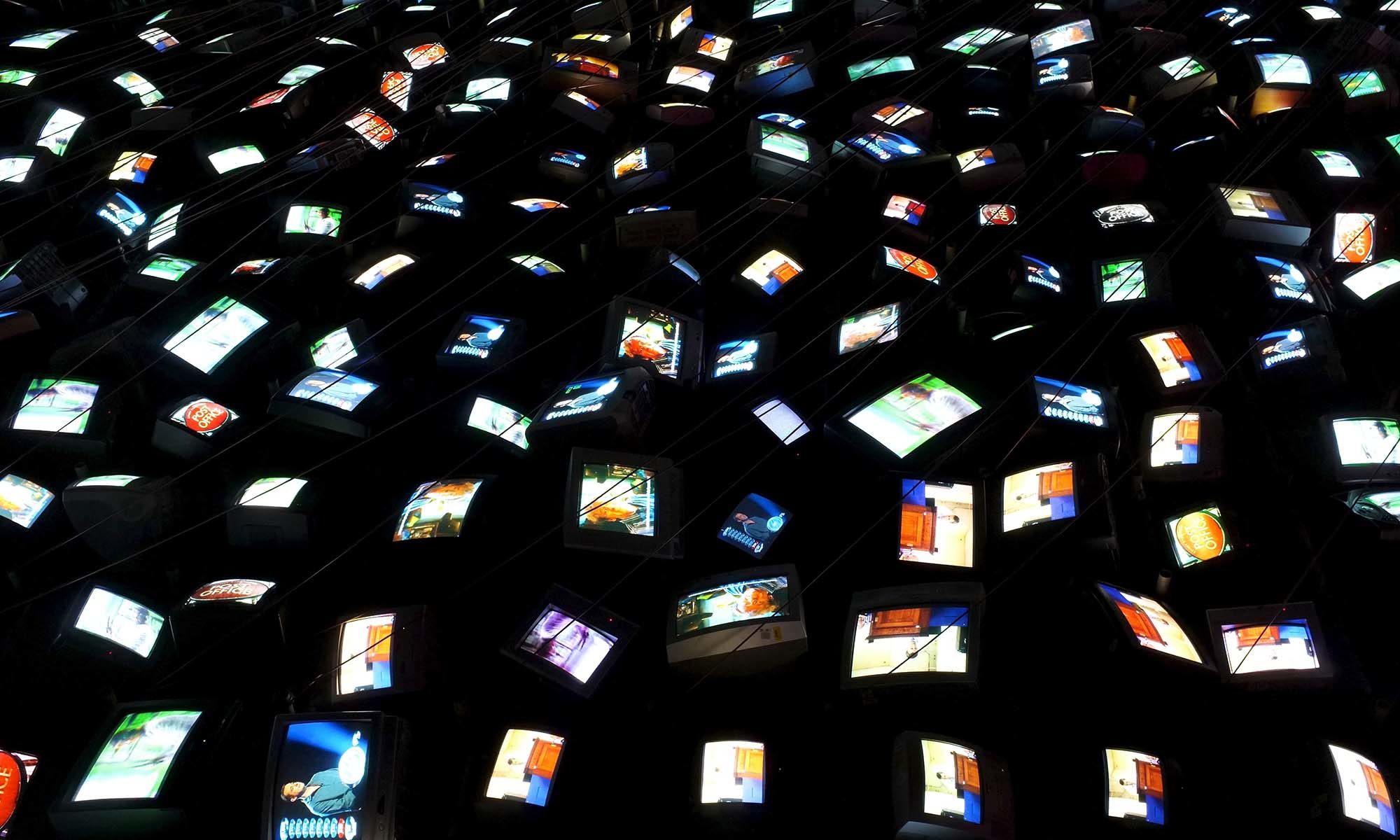
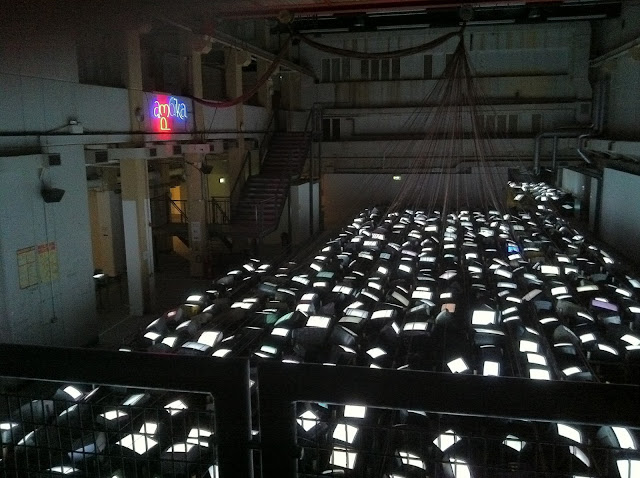
Ambika P3 (curated by Michael Maziere), presented a major solo exhibition by David Hall, the influential pioneer of video art, featuring a new commission 1001 TV Sets (End Piece)’ 1972-2012, as well as re staging two seminal early works. This timely exhibition vividly heralded the end of analogue TV in the UK as London finally switched to digital in April 2012.
Exhibited Works: 1001 TV Sets (End Piece) 1972-2012; …
Continue reading “1001 TV Sets (End Piece) 1972-2012”
My own piece Orientation Studies used a series of eight black and white video monitors lying on their backs below two viewing platforms. The monitors showed a repeated pro-recorded image of rapidly flowing streams and rivers which moved through the frame to produce extreme perceptual disorientations. – Stuart Marshall
Eight monitors placed side-by-side on their backs show a tape of edited shots of flowing water (waterfalls, streams, rivers). The row of images is seen from a platform giving a viewing distance of approximately 6ft. …
Continue reading “Orientation Studies (Installation 1976)”
Televisual practice and its economic determination. Nineteenth century bourgeois theatrical conventions and their effects. Sexuality and the limits of televisual representation. So what do we talk about? Just a few topics are available and you know them as well as I do. There’s sex of course, always there’s sex. We imagine, falsely, that we talk about it in hushed voiced, confessing our sexuality. In fact, weve been on about it for centuries, shouting it from the rooftops, …
Continue reading “Distinct (1979)”
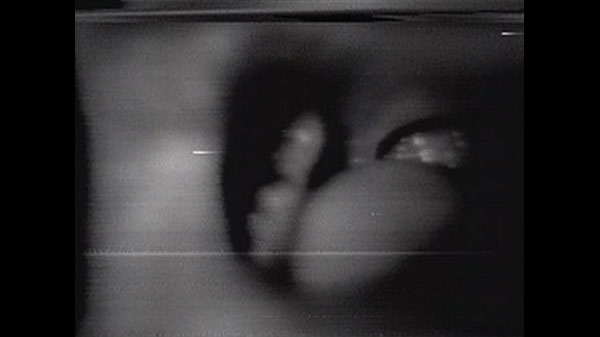
“An extreme close-up of a mouth is used to examine speech patterning, perception of mime, vocal cavity resonation and the electronic fracturing of speech. Mouth Works is composed by three works: Going Through the Motions, Arcanum and Mouth Room.”
Video Artists on Tour catalogue , 1980, Arts Council. …
Continue reading “Arcanum (1976)”